Electroencephalogram (EEG)
EEG records brain activity from sensors placed on the scalp while the patient rests. DeepPsy uses these patterns as one part of the report physicians review when planning care.

HOW WE WORK
DeepPsy analyses resting-state EEG and ECG data and turns the findings into a structured report for physicians. The process is designed to support treatment planning with physiological information.
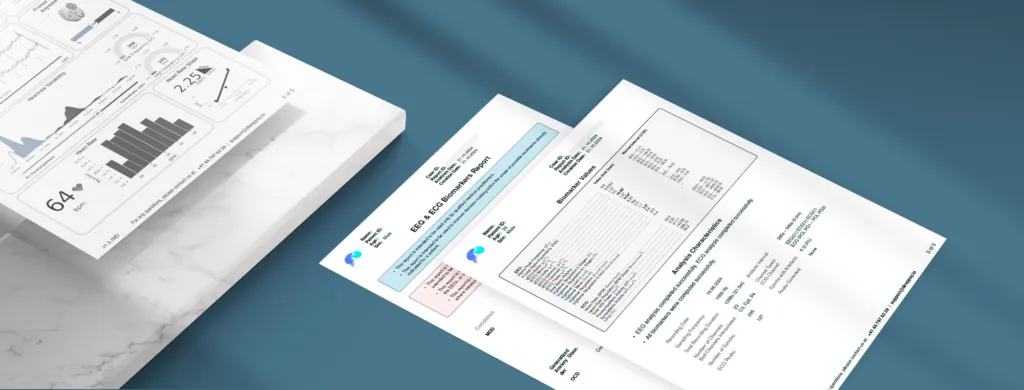
Two painless, non-invasive recordings add physiological context to the physician’s treatment decision.
EEG records brain activity from sensors placed on the scalp while the patient rests. DeepPsy uses these patterns as one part of the report physicians review when planning care.
ECG records heart rhythm from small body sensors during the same appointment. This adds body-based context that can help physicians interpret the EEG findings more clearly.
OUR PATHWAY
DeepPsy helps move a case from referral or data upload to recording coordination, EEG/ECG review, and a physician-ready report. The report supports the clinical discussion, while questionnaires can add baseline context and track progress over time.
Once usable EEG and ECG signals are received, the report is typically available within three days.

Physiological context
DeepPsy analyses resting-state EEG and ECG recordings separately first, then brings the findings together for the physician’s treatment discussion.
Resting-state brain activity
Shows the dominant rhythm of brain activity during the resting-state recording.
Compares activity patterns between brain regions that may be relevant to depression and treatment response.
Describes alertness and brain-state regulation while the patient is at rest.
Cardiac rhythm context
Measures cardiac activity during the recording.
Reflects autonomic nervous system regulation.
Complements EEG findings with body-based physiological information.
DeepPsy brings EEG and ECG findings together in a structured report so they can be interpreted in the patient’s clinical context.
Treatment contexts
EEG and ECG findings can add biological information when physicians compare options such as antidepressant class, rTMS protocols, esketamine, and ECT.
Treatment area
DeepPsy helps with
Comparing whether SSRI or SNRI treatment is more promising.
Supporting protocol choice between 1 Hz, 10 Hz, and 18 Hz.
Identifying which patients may be more likely to benefit.
Assessing expected treatment effectiveness using EEG-derived markers.
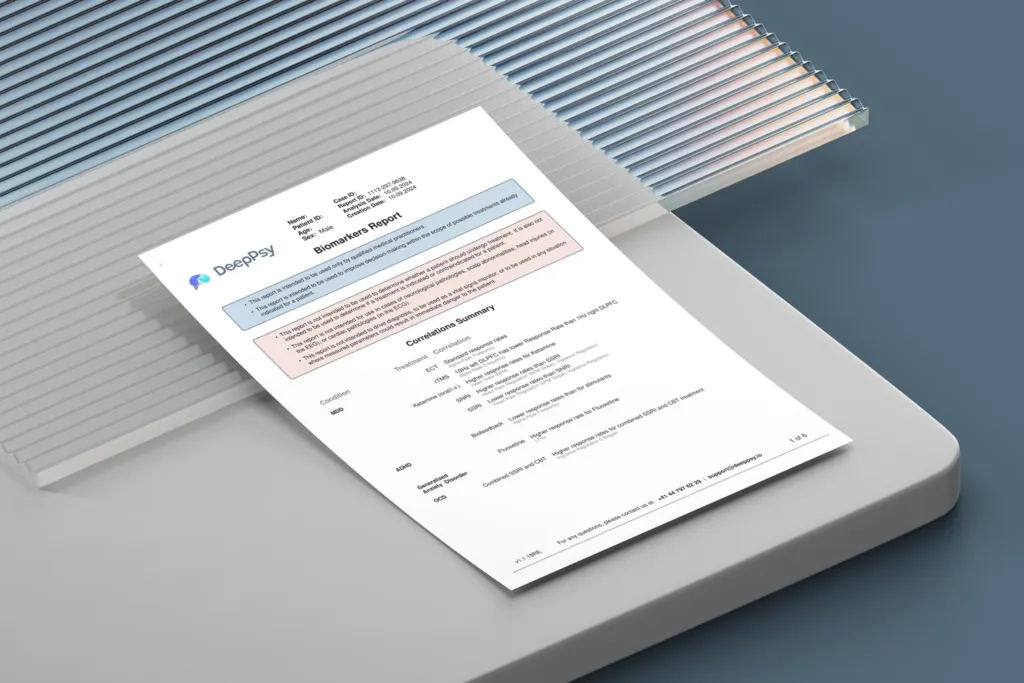
Our report brings precise physiological context into treatment planning and patient discussions.
A concise clinical report for review, referral context, and patient discussion.
Physiological signals are translated into treatment-relevant context.
The findings are organised so the next treatment conversation is easier to frame.
Physicians can focus on workflow and clinical use. Patients can focus on what the recording means and how the physician explains the report.
No. If your clinic does not record EEG/ECG, DeepPsy can help coordinate the recording pathway with an appropriate provider.
You can upload suitable recordings through the DeepPsy portal. DeepPsy checks whether the data can be used for analysis.
The report should be reviewed together with the patient’s clinical history, symptoms, previous treatments, and current treatment options. It supports physician decision-making; it does not replace it.
No. EEG and ECG are non-invasive recordings. Sensors are placed on the scalp and body to measure electrical activity.
The report is intended for the treating physician. Your physician reviews the findings and discusses what they mean for your care.
DeepPsy gives your physician additional biological information before deciding on the next treatment step. This can support a more informed discussion and a more structured follow-up process.
Whether you already have EEG/ECG data or need help organising the recording, DeepPsy can guide the process from first step to report delivery.
Read the full FAQ